
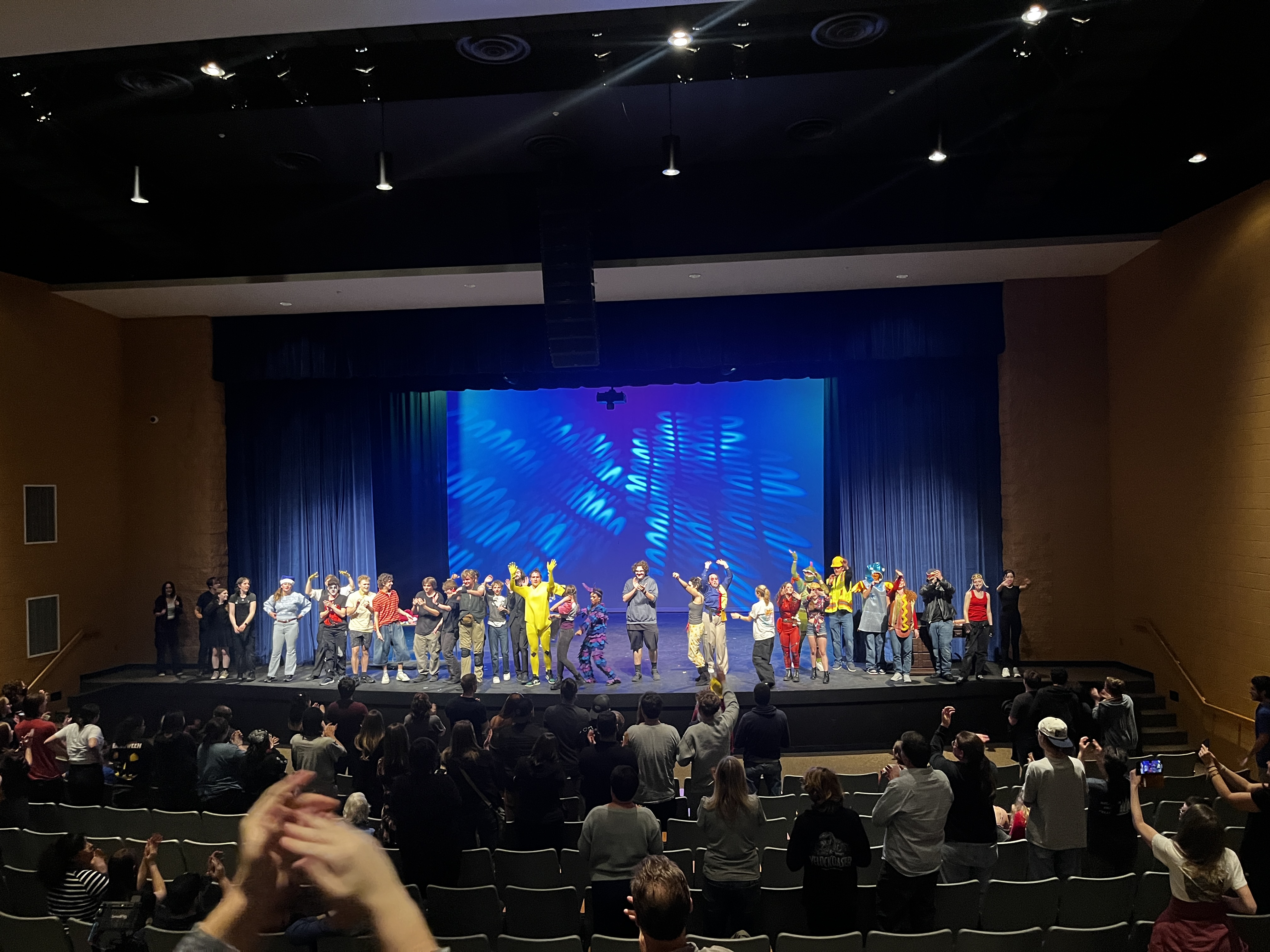

“Fortnite the Musical” was not just a performance. It became a memorable journey for everyone involved, from actors to audience members. Last Thursday and Friday, Legend High School staged its annual one-act musicals, resulting from four months of student creativity and collaboration. The night featured “Monster Mash,” followed by the much-hyped “Fortnite the Musical,” which proved to be far more than just a meme-filled parody. It was a celebration of theater, gaming, and community spirit.
The story follows streamer Richard Tyler Blevins, who dreams of reaching 1 million viewers. After singing “A Million Dreams” from “The Greatest Showman,” he has a meltdown when his mother interrupts his stream for dinner, smashing his setup. In a surreal twist, Blevins is transported directly into the world of Fortnite, where he meets teammates Brite Bomber and Peely the Banana. The trio drops into Pleasant Park and begins their wild journey, filled with chaotic battles, hilarious encounters, and surprising alliances.
At Pleasant Park, Brite Bomber and Peely quickly eliminate enemy teams while Blevins runs from danger. When Blevins stumbles upon a llama, instead of treating it like a loot piñata, he is charmed when the llama sings “Friend Like Me” from “Aladdin.” Blevins decides to befriend the llama.
The squad moves on to Flush Factory, where they encounter an enemy who hits them with a boogie bomb, forcing them into a dance. After dancing for a while, Peely ends the threat. He then breaks into song, performing “Fort The Night,” a parody of Sublime’s “For The Night,” showing his hidden depth. The journey continues to Risky Reels, where the team pauses to watch a love story between Beef Boss and Tomato Head.
However, John Wick and Renegade Raider ambush the team, leading to the tragic death of the beloved llama. Blevins tries to fight, but is sniped and knocked down. His team then revives Blevins, while the villains get away.
The villains regroup at a vault, plotting their next move against Blevins and his friends. Meanwhile, Blevins, Peely, and Brite Bomber seek help from an old man at Loot Lake, leading to a training montage full of building practice and fighting drills. When it seems they are ready, Peely is tragically sniped by Renegade Raider. With only one van left at Tilted Towers, the team sets out on a high-stakes mission to revive Peely.
During the journey, Brite Bomber and Blevins share a heartfelt moment by a bus, reflecting on their bond. This sweet exchange deepens their connection. At Tilted Towers, the team uses smart distractions to reboot Peely. A massive battle ensues, with Peely eliminating most enemies, leaving only Renegade Raider and John Wick.
Before the final battle begins, the real motive behind John Wick’s grudge is finally revealed. He had once been banned from Blevins’ Twitch stream after making a rude comment about Blevins’ mom. Their conflict climaxes in a Western-style standoff. Blevins shoots first, eliminating John Wick and securing victory.
The show ends with Blevins waking up in real life, realizing it was all a dream. Yet when he gets a call on Discord from Brite Bomber, hinting that maybe it wasn’t a dream. Blevins realizes he hit a million viewers and celebrates. He and Brite Bomber break into a final performance of “One Million Dreams.” The curtains close with the crowd cheering, and the cast takes their bows to the song “Chug Jug With You” by Leviathan.
What made “Fortnite the Musical” stand out was not just its clever script or catchy musical numbers, but the heart behind it all. The production treated Fortnite with humor and affection without ever feeling cynical or lazy. It found that rare sweet spot where inside jokes for gamers landed just as well as broader emotional moments for those unfamiliar with the game. It was clear that every scene, every fight, and every joke was crafted with real love for theater and gaming culture.
The choreography was amazing, lively, and smart. Musical numbers like the boogie bomb dance and Peely’s heartfelt solo had real emotional weight. The production even handled an unexpected technical difficulty with charm, as the writer led a spontaneous round of Fortnite trivia to keep the audience engaged.
Character development elevated the show beyond surface-level parody. Blevins’ transformation from selfish streamer to loyal teammate was believable and satisfying. Side characters like Peely and even the llama were given enough attention to make their losses and wins feel meaningful. The show did not rely only on memes; it built real relationships between its characters and gave the audience genuine stakes to care about.
The crowd itself became a crucial part of the experience. At first, there was a mix of curiosity and skepticism, but as the show progressed, enthusiasm grew. By the final battle at Tilted Towers, the audience was fully invested, rooting for Blevins and his squad as if it were a real match. This kind of audience engagement is rare and speaks volumes about the production’s success.
In the end, “Fortnite the Musical” was not just entertaining. It was a showcase of creativity, collaboration, and the potential of student theater. It proved that with enough heart and hard work, even a show about a video game could leave audiences genuinely moved. What could have been a goofy throwaway became a night people will remember not just for the laughs, but for the love and effort that brought it all together.